 Ficorpio
Chapter 1
While playing hide-and-seek with my daughter, I deliberately locked the cabinet she was hiding in.
Then my wife, my son, and I moved away as fast as we could.
Twenty years later, I returned to our old house to bury my daughter’s body.
But as I stepped up to the cabinet, I heard a little girl’s voice from inside.
“Daddy, are you finally going to find me?”
It all started because our son was getting married. My wife and I went to see a fortune teller.
We only wanted him to choose a lucky date for the wedding. But after finishing his reading, he looked at us gravely.
“Do you have a child who hasn’t come home in years? Something isn’t right here.”
My heart lurched.
I glanced at Margaret. The flicker of panic on her face told me she was thinking exactly what I was.
“Your son’s wedding is a major occasion,” the fortune teller continued. “The whole family needs to be reunited before it can take place. If someone still hasn’t come home, I’m afraid something could go wrong afterward.”
“What could go wrong?” Margaret asked.
“Don’t ask. Just understand that it would be something very bad.” He paused. “You have a daughter too, don’t you?”
I nodded. “Yes, but—”
“That explains it. The reading tells me your daughter wants very badly to come home.” He clicked his tongue. “That girl is quite a force to be reckoned with.”
I couldn’t make sense of what he was saying.
Our daughter had been dead for twenty years. How could she want to come home? And what could possibly make her a force to be reckoned with?
“The dead belong in the ground, and the living belong at home,” he said. “If you want this marriage to get off to a happy start, everything must be in order. Go home. Once the whole family is together, come back and I’ll choose a wedding date.”
He wouldn’t budge. We had no choice but to leave.
Back at our house, Margaret looked distraught.
“What are we going to do?” she asked helplessly. “We moved away twenty years ago. Chloe’s been dead for years. How are we supposed to bring her home?”
I raked a hand through my hair, just as frustrated.
Our son’s fiancée came from a wealthy, influential family. Daniel was lucky to have found someone like her.
The Harts were particular about how things were done. They had repeatedly insisted that we consult a fortune teller to choose a lucky date for the wedding.
Now our daughter was holding everything up.
I had to find a way.
Our daughter’s name was Clara Whitaker. We called her Clary.
If she were still alive, she would have turned twenty-eight this year.
When Clary was eight, Helen and I decided to go to the city to find work.
Chapter 2
For people from the country, making a living in the city was hard enough. Bringing two children along would only make things more difficult.
The night before we moved, Helen suddenly said she didn’t want to take Clary with us. She planned to bring only our seven-year-old son.
My parents were already dead, so the children had no grandparents to care for them. If we left our daughter behind, there would be no one to look after her.
“Then she won’t need anyone,” Helen said. “We’ll lock her in the house and pretend she was never born.”
Her words stunned me.
But Helen didn’t seem to think there was anything wrong with it. “What’s so strange about that? How many baby girls in this town were killed by their own parents the moment they were born? We raised Clary to the age of seven. That’s already more than most people would do.”
“But…”
“Stop arguing. I’ve made up my mind. Tomorrow, do exactly as I tell you.”
Helen had always favored boys, and she was used to getting her way.
The next morning, we packed as usual.
Clary and her little brother were thrilled. They ran back and forth, eagerly stuffing their toys into the large bags.
When everything was nearly ready, Helen gave me a look.
I understood what she meant. After hesitating for a long time, I finally walked over to my daughter.
“Clary, Daddy’s tired from packing. Why don’t we play hide-and-seek?”
Clary had never liked hide-and-seek. She pouted and said, “I don’t want to play. I want to pack.”
Then Daniel came to my rescue.
“I want to play hide-and-seek! Please play with me, Clara!”
I rarely played with the children, and Daniel had always wanted more of my attention.
After he begged her several times, Clary finally agreed.
So I pretended to enjoy myself and played with both children for a while.
Then Helen signaled again. The luggage was packed. We were ready to leave.
I knew it was time.
“This will be the last round,” I said. “This time, Clara will hide while Daniel and I look for her. Clary, make sure you find a really good hiding place.”
Helen put on an equally false smile. “Don’t worry. I know the perfect place. They’ll never find you there. Come on, sweetheart. Mommy will take you.”
She led our daughter toward the small storage shed.
Only Helen and I knew that there was a cellar beneath it.
My great-grandfather had dug the underground cellar many years earlier to store grain in case of famine. Later, life improved, and no one had to worry about starving anymore. Eventually, the cellar was abandoned.
Chapter 3
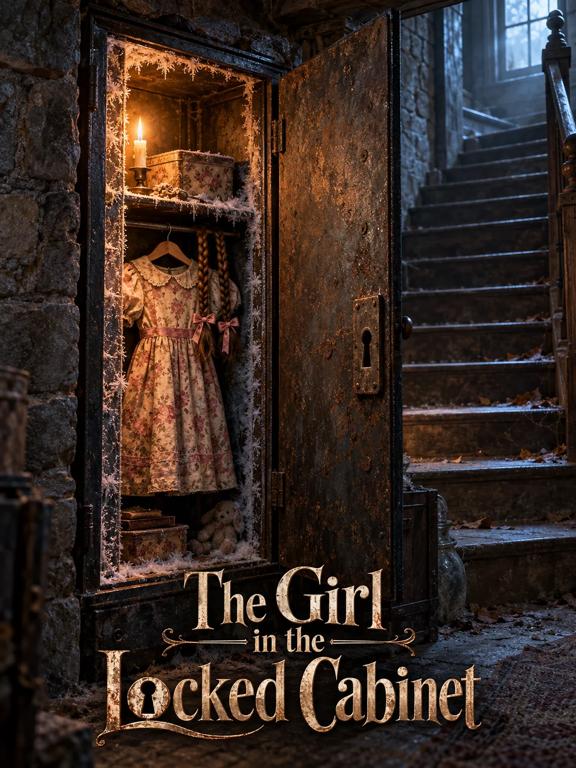
There was a huge, rusted iron cabinet inside. It had been there for as long as I could remember.
The cabinet was thick and incredibly heavy. It would have taken three or four adults to move it. Its door was a solid iron slab, impossible for a child to open.
As Helen led Clary down into the cellar, I saw the lock in her hand.
Not long afterward, Helen came back up.
She was alone.
That night, we called the police and claimed that our daughter had disappeared.
Child traffickers were rampant in those days. Helen cried so hard in front of the officers that no one suspected us of having anything to do with it.
Twenty years passed in the blink of an eye.
We returned to our old home a few times over the years, but Helen and I silently understood one another. Neither of us ever mentioned what we had done.
Neither of us went down into the cellar.
This time, because of Daniel’s wedding, I had no choice.
“Did you hear what the diviner said about ‘the dead returning to the earth’?” Helen asked. “It must mean Clary was never buried. He must have sensed it somehow. I’ll go back and put her in the family cemetery. Hopefully, she’ll finally rest in peace and stop interfering with our son’s wedding.”
“That’s right,” Helen said firmly. “Go now. Whatever you do, don’t let this delay Daniel’s marriage.”
I went back to the old house that same night.
It was an old single-story place, and I kept to the darkness the entire way, too afraid to turn on the lights in case a neighbor noticed something unusual.
Inside the storage shed, I found the cement cover concealing the entrance. As soon as I lifted it, I knew something was wrong.
A draft rushed up through the opening and swept across my face, cold enough to make me shudder.
That wasn’t all.
The instant I moved the cover aside, I heard a bang from below.
Dull. Heavy.
It sounded like something had suddenly slammed into the iron cabinet underground.
I nearly dropped my flashlight. I held my breath and listened, but the strange noise did not return over the next several minutes.
I told myself it was probably a rat startled by our arrival, scurrying around somewhere down there.
Convincing myself it was nothing, I went down the steps and entered the cellar.
Nothing had changed in twenty years.
The place lay empty and pitch-dark. My flashlight swept across it, revealing only the large cabinet in the corner.
Rust covered its surface, with patches of paint flaking away. The padlock hanging from the cabinet door was still fastened tightly in place.
I did not smell the foul odor of a corpse.