 Ficorpio
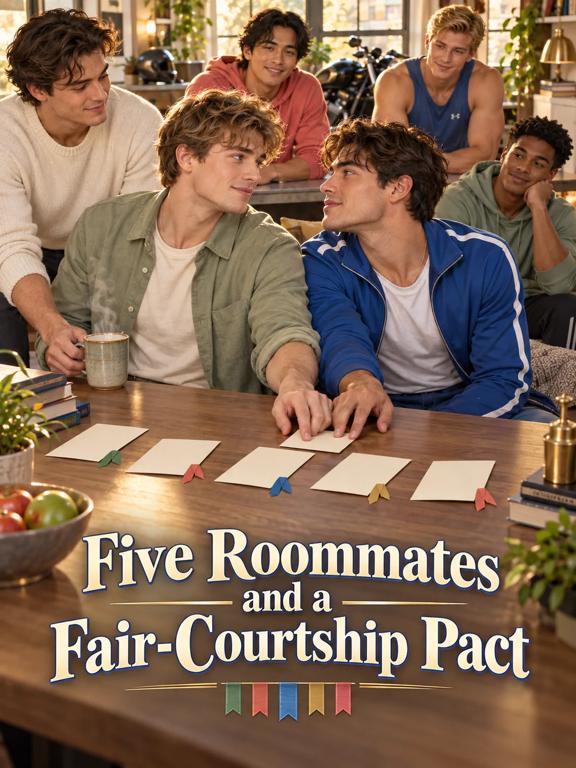
Chapter 1
The condom wrapper was silver, torn across the top, and tucked halfway under the comforter.
I stared at it from the edge of a bed I did not recognize.
For a moment I tried to remember arriving here. I got a blue hotel sign in the rain, music rattling a car window, and somebody laughing in the back seat. Then the memory went out like a light. The clock beside me read 8:17. The other half of the bed was empty.
I pulled the comforter over my knees. My black shirt hung from a lampshade. One shoe sat beside the television, the other beneath the desk. My jeans lay inside out near the bathroom door. I was wearing underwear and an oversized white T-shirt that was not mine.
Moving made my head pound. It also brought a sore pull through my inner thighs.
I went still.
The wrapper did not explain the soreness. Neither did the missing hours. I knew that. My body, less interested in careful reasoning, had already decided to panic.
I stood too fast and caught myself on the desk. In the bathroom mirror, my hair stuck up on one side, my face had gone pale, and two reddish marks showed below my left ear. A fainter one sat near my collarbone. I touched the edge of one and felt tenderness under my fingertip.
“Okay,” I said to the stranger in the mirror. “What do we actually know?”
He offered no help.
I knew I had gone out with my five roommates. I knew there had been rain, a highway, a paper cup in my hand. I remembered somebody handing me water and telling me to slow down. I could not attach a face to the voice. I could not remember getting undressed or decide what the marks meant.
The six of us had left Briarport together. Somehow I had woken up alone.
I turned on the faucet and held my wrists under cold water. My phone was dead on the desk, so I plugged it in. While it charged, I searched the room.
The key sleeve said THE HARBORLIGHT INN. A receipt showed two bottles of water and pain relievers purchased at 1:43 a.m. It did not say who had bought them. Three towels were damp, though only one person remained. My wallet was intact; the cash and cards were still there. An empty sports drink bottle and a takeout carton sat in the bin.
Every object answered the wrong question.
The opened wrapper stayed where it was. I wanted to throw it away, and I wanted it to tell me exactly what had happened. It could do neither. It told me only that someone had opened it.
My phone woke at four percent. Forty-one unread messages waited in the roommate group chat. Three missed calls came from the inn’s front desk. I hovered over the chat, then opened the camera instead.
I photographed the marks on my neck, the wrapper, and the room. I wrote down what I remembered before a new explanation could quietly replace an old memory. With a tissue, I lifted the wrapper into an unused plastic laundry bag. I kept the receipt and key sleeve too. I could seek medical care without first deciding what had or had not happened; I put that on the list of choices I needed to make today.
The note on my phone was pitifully short:
Rain. Blue sign. Paper cup. Water offered. Someone on the carpet. Someone saying slow down. 1:43 a.m. Three towels. Wrapper.
I read it twice. On the third pass, I noticed I had left out the only names I was certain belonged in my account of last night: Noah, Mason, Cole, Jude, and Owen.
For two years, those five had been the people who knew when I skipped breakfast, stole my charger, and appeared at my door whenever I said I wanted to be alone. One of them always had an answer to the most trivial question about my day. Surely they could answer this one.
That thought should have made me feel better.
I packed my clothes. I pulled a hoodie from my overnight bag and zipped it high enough to hide my neck. On the ride back to campus, the chat icon kept its bright red number. Opening it might give me a timeline. It might also give five people a chance to tell me what to think before I heard them separately.
I put the phone face down.
Outside West Hall, the mist had thinned. Students crossed the courtyard with coffee and backpacks, arguing about assignments as though nothing in the world had happened since last night. I stood beneath the entrance awning with the bagged wrapper in my overnight bag and watched the windows of Suite 6B.
I had imagined marching in and putting everything on the table. Now I wanted to hear what each of them volunteered first. Who had booked the room? Who had stayed? Why had they left me there? The answers could be ordinary. I would have been grateful for ordinary.
I went inside.
The problem with coming home to five possible suspects was that they still looked like home.
I stood outside West Hall Suite 6B with my key in my hand and listened to the familiar noise on the other side of the door. A game announcer shouted from the television. Someone in the kitchen swore at a blender. Mason laughed hard enough to start coughing, which meant he was probably responsible for both.
Normal. Every sound was painfully normal.
My overnight bag pulled at my shoulder. Beneath my jeans, the soreness along my inner thighs remained a dull reminder of The Harborlight Inn. The marks on my neck were hidden under a hoodie zipped higher than the weather justified.
Five men lived behind this door. Five adult athletes I trusted enough to call family on good days and unbearable on most others. One or more of them might know how I had ended up alone in that hotel room.
I unlocked the door.
A blender lid shot across the kitchen.
Green sludge struck the ceiling.
Chapter 2
Mason stared up at it, one hand still resting on the blender. “That feels personal.”
“You have to put the lid on before you turn it on,” Owen said from the sink.
“I did put it on.”
“Holding it above the blender isn’t the same thing.”
Cole, stretched across the center of the couch with a basketball game paused on the television, looked over his shoulder. “You’re cleaning that.”
“Good morning to you too, Captain Joy.”
Jude sat at the dining table in a black shirt that probably cost more than my laptop, polishing a motorcycle helmet with the concentration of a museum conservator. He glanced at the ceiling. “Leave it. It adds color.”
Noah occupied the armchair by the window, one ankle resting over his opposite knee, a book open in his hand. Unlike everyone else, he did not look at the mess first.
He looked at me.
His gaze paused on my zipped collar.
Then it rose to my face.
I tightened my grip on my bag. It was barely a reaction, but this morning I had become an unwilling expert in barely.
Mason recovered first. “Six returns! And he brings luggage, mystery, and a deeply judgmental expression.”
“This is my face.”
“Exactly. Judgmental.”
The suite nickname usually made me smile. I was the sixth roommate, the only non-athlete among five men who could turn a grocery run into a competition. Today it sounded like a reminder that I was outnumbered.
Cole sat up. “You said you were staying off campus last night.”
Not Where were you? Not Are you okay?
A statement. A prompt.
I shut the door behind me. “Excellent memory. This is why they made you captain.”
“They made me captain because I can win games.”
“And because modesty would’ve conflicted with your schedule.”
Jude smiled without looking away from me. His expression was easy, but the cloth in his hand had stopped moving over the helmet. “Did your glamorous night away fail to meet expectations?”
“The complimentary soap was the size of a postage stamp. I’ve already contacted the authorities.”
Owen dried his hands and crossed the kitchen. He did not reach for me. He took the slipping strap of my overnight bag only after I let it slide from my shoulder.
“Heavy?” he asked.
“Mostly emotional baggage.”
“I’ll put it in your room, kid.”
There was no performance in Owen’s concern. That almost made it worse. I watched him carry the bag down the hall as if it weighed nothing and wondered whether practical kindness could hide a lie.
Anything could hide a lie if I stared at it long enough.
Mason pointed a green-speckled spoon at me. “Smoothie? It’s spinach, mango, protein powder, and structural failure.”
My stomach turned. “Tempting, but I recently made a promise to continue living.”
He grinned, then studied me more closely. The grin softened. “You look tired, El.”
The name was familiar from him, warm rather than possessive. Usually I let it pass without thought.
“Didn’t sleep well,” I said.
Mason’s eyes flicked toward the others. Fast. Almost invisible.
Interesting.
Or meaningless.
That was the trouble with conducting an investigation when every subject knew me well enough to notice I was acting strange. I needed a clipboard, a one-way mirror, and possibly a degree I was not earning.
Noah closed his book. “Did someone hurt you last night?”
The room changed by half a degree.
My pulse struck once, hard. “By the hotel soap? Emotionally, yes.”
Noah did not smile. “That isn’t what I asked.”
Cole’s attention sharpened. Mason lowered the spoon. Jude set his polishing cloth on the table with deliberate care.
Owen came back from the hall and stopped beside the couch, broad shoulders still, his eyes on my face.
Five pairs of eyes. Five men waiting.
Pressure climbed the walls.
I held up a hand. “Before this becomes a deeply invasive medical panel, I’m fine. I stayed out too late. I slept badly. I came home. End of thrilling narrative.”
It was not the truth, but it was not entirely a lie. I refused to discuss the opened condom wrapper or the blank spaces in my memory while all five of them watched me at once.
Cole leaned forward, forearms on his knees. His voice stayed blunt, but not hard. “If something happened, say so.”
“And if I don’t want to?”
His jaw shifted. For a second, the answer Take your time seemed to have to fight its way past several more commanding options.
“Then we drop it,” he said.
I glanced at him, surprised.
Jude lifted one shoulder. “The gentleman has invoked his right to remain mysterious. Tragic for us, but legally devastating.”
“Thank you, counsel.”
“My fees are obscene.”
“Your personality is obscene.”
“And yet you missed me.”
The ease of the exchange settled over us, not enough to erase the tension but enough to make breathing possible. Mason went back to attacking the ceiling with paper towels. Cole restarted the game. Jude resumed polishing his helmet. Owen opened the refrigerator and frowned at its contents as if somebody had personally disappointed him.
Noah reopened his book.
None of them volunteered why I had been left at the hotel.
That should have comforted me. Instead, suspicion curled tighter.
They were giving me space because they loved me like family.
They were giving me space because they knew exactly what I might say.
Both explanations fit too well.
I escaped to my bedroom before my face could reveal which possibility frightened me more.
Chapter 3
My room was the smallest in the suite, but it was mine: narrow bed, crowded desk, camera equipment lined up beneath the window, two plants surviving through spite and Owen’s watering schedule. My overnight bag sat neatly beside the closet.
I locked the door.
Then I checked it twice, which was ridiculous. No one in the suite made a habit of entering without knocking. One uncertain morning did not erase two years of trust.
It only made trust feel like something I had been careless with.
I sat at my desk and opened the lifestyle account on my phone.
Ten thousand followers looked impressive when reduced to a number. In practice, it meant people watched me review cheap coffee, arrange thrift-store jackets, and pretend I had useful opinions about desk lamps. I had never posted anything deeply personal there. Personal-adjacent, yes. A rainy-window photograph captioned existential weather was as vulnerable as I usually got.
The blank post field waited.
I typed, I think I might be gay.
My thumb froze.
The sentence looked enormous on the screen.
I deleted it.
Then I typed, Hypothetically, how does someone know if he might be gay?
That sounded like I was asking for a friend, and no one in recorded history had ever believed someone asking for a friend.
Delete.
Maybe I’m not as straight as I thought.
Delete.
I dropped my forehead onto the desk.
The plan had seemed intelligent during the ride back to campus. I would create a private post visible only to the five roommates. If one of them knew something about last night, maybe the suggestion that I was questioning my sexuality would make him react. Too much concern. Too much confidence. Jealousy. Guilt. Recognition.
A reaction could not prove what had happened. I knew that. At best, it might tell me whom to question first.
It was bait.
That was all.
It had absolutely nothing to do with the way Noah’s stare sometimes made my thoughts misfire, or how Mason could drape himself over the back of my chair and leave warmth behind after he moved, or how Cole’s attention irritated me most when it landed elsewhere. It had nothing to do with Jude’s outrageous flirting or the quiet comfort of Owen remembering every small thing I forgot.
I was straight.
Probably.
Historically.
The label had always felt less like a discovery than a box I had never found a reason to open.
I lifted my head and tried again.
I might be gay. Still figuring it out.
Seven words. Somehow worse than the hotel room.
Before I could lose my nerve, I opened the audience controls. The account had ten thousand followers, but this would not go to ten thousand people. I selected the private list, removed everyone already on it, then added exactly five names: Noah, Mason, Cole, Jude, and Owen.
I checked the list once.
Twice.
A third time, because accidentally announcing an identity crisis to my mother would kill me before the crisis got interesting.
Only the five roommates could see it.
This was not a public coming-out. It was a controlled test conducted by one nervous idiot in a locked bedroom.
I hit post.
For three seconds, nothing happened.
Then a notification appeared.
Mason liked your post.
I stared at it.
A second notification followed.
Mason unliked your post.
Despite myself, I laughed.
From the other side of the wall came a muffled, “Oh, come on.”
Another notification appeared. Jude had viewed it. Then Cole. Owen.
Noah’s name appeared last.
No comments. No messages.
The silence in the suite became so complete I could hear the television announcer describing a free throw.
The post had changed the room.
It had told me nothing about the night I was trying to reconstruct.
Someone knocked.
Three quick taps, one slow. Mason.
“Unless you’re delivering pizza or a revised sexual identity, go away.”
“I have neither, but I can offer a granola bar and emotional support from a legally respectful distance.”
I opened the door.
Mason stood two steps back, true to his word, holding a granola bar between two fingers. The other four were visible in the living room. No one had gathered directly outside my door, which I appreciated. They had arranged themselves with such obvious casualness that it would have been less suspicious if they had formed a committee.
I took the granola bar. “Why did you like it?”
Mason’s ears turned pink. “Reflex. I support you. Then I realized it looked like I was saying congratulations on the gay thing, which felt weird. Then I unliked it, which looked hostile. There was no winning.”
“A devastating social-media tragedy.”
“I’ll carry it forever.”
His smile was warm but uncertain. He searched my face, then seemed to decide not to ask whether the post was true.
That restraint registered more strongly than any question could have.
Cole muted the television. “Was that meant for us?”
Straight to the point. Of course.
I moved into the living room but stayed near the hallway, keeping an easy exit behind me. “Only you five can see it.”
Jude’s brows rose. “An exclusive audience. I should’ve dressed better.”
“You’d wear cuff links to a fire drill.”
“Standards survive emergencies.”